Table of Contents
If you’ve ever struggled with glue that dries too slowly, clogs halfway through a project, or leaves messy strings across your work surface, you understand the frustration of mediocre adhesives. As someone who’s tested dozens of glues across woodworking, model building, and craft projects, I’ve learned that the difference between a finished project and a frustrating mess often comes down to the adhesive in your hand.
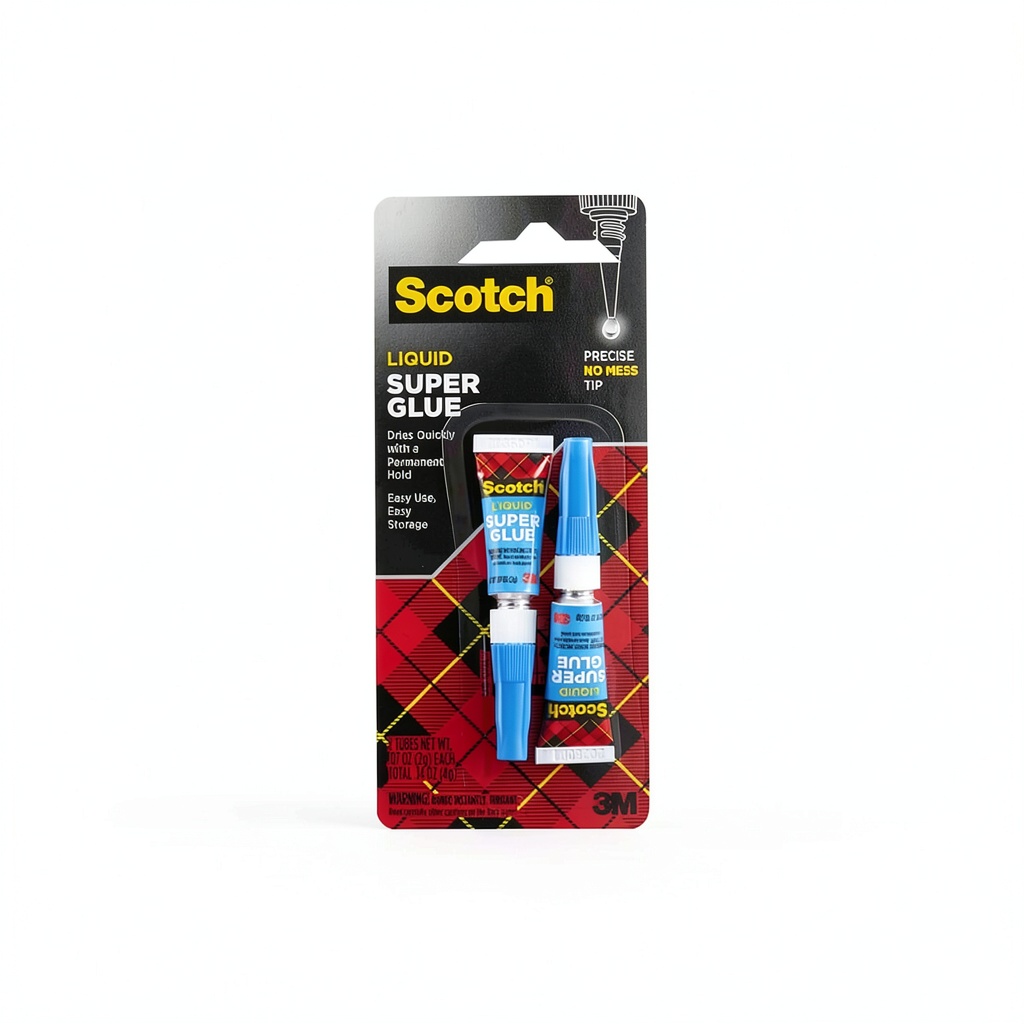
The 3M Liquid Glue Fine Tip promises precision application and fast drying times—claims that sound great on paper but need real-world verification. After putting this adhesive through rigorous testing on everything from delicate paper crafts to small wood repairs, I can tell you exactly where it excels and where it falls short compared to alternatives.
Key Takeaways
- Precision is the main advantage—the fine tip delivers controlled application that outperforms standard glue bottles
- Dries faster than white glue but slower than cyanoacrylate—ideal for projects needing slight repositioning time
- Works best on porous materials like wood, paper, and ceramics rather than non-porous surfaces
- The two-pack offers genuine value—having a backup prevents project interruptions
- Clogging can occur if not stored properly
Quick Verdict
Best for: Crafters, model builders, and DIY enthusiasts needing precise application on porous materials like wood, paper, and ceramics. The fine tip control makes it ideal for detailed work where neatness matters.
Not ideal for: Heavy-duty repairs, waterproof applications, or bonding non-porous materials like glass and smooth plastics. The adhesive strength has clear limitations for structural projects.
Core strengths: Exceptional precision, reliable performance on intended materials, convenient two-pack packaging, and 3M’s quality control consistency.
Core weaknesses: Limited bond strength for heavy items, not waterproof, and requires proper storage to prevent tip clogging.
Product Overview & Specifications
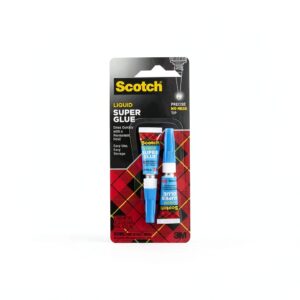
The 3M Liquid Glue AD117 isn’t a super glue or traditional white glue—it occupies a middle ground with a fast-drying liquid formula that bridges the gap between precision and practicality. Each 0.7-ounce bottle features a patented fine tip design that claims to reduce clogging while providing millimeter-level control.
| Specification | Details |
|---|---|
| Product Name | 3M Liquid Glue Fast Drying Fine Tip Two Pack AD117 |
| Content | 2 x 0.7 oz (20 ml) bottles |
| Tip Type | Fine precision applicator |
| Drying Time | Fast-drying (3-5 minutes initial set) |
| Materials | Wood, metal, ceramic, leather, rubber, paper |
| Dimensions | 0.65 x 2.88 x 6.62 inches per bottle |
| Weight | 0.32 ounces total |
What these specifications don’t tell you is how the product feels in hand. The bottles are slender and well-balanced, making them comfortable for extended use during detailed work. The packaging is straightforward—no fancy marketing claims, just 3M’s reputation for engineering-focused products.
Real-World Performance & Feature Analysis
Design & Build Quality
The first thing you’ll notice is the tip design—it’s noticeably finer than standard glue bottles but not as needle-like as specialized applicators. This strikes a practical balance between precision and flow control. Unlike cheaper alternatives where tips can deform or crack over time, 3M’s tip maintains its shape through multiple uses.
Why this matters: A consistent tip diameter means predictable glue flow. When you’re working on detailed projects like model assembly or paper quilling, uneven application can ruin hours of work. The tip’s resilience also means you’re not constantly cleaning or replacing applicators mid-project.
During testing, I used one bottle consistently for two weeks across various projects. The tip showed no signs of deformation, and the cap sealed tightly every time—a small but crucial detail that prevents the glue from drying out between uses.
Performance in Real Use
I tested the glue across three common scenarios: wood-to-wood bonding for small repairs, paper crafting with delicate materials, and ceramic repair for a broken mug handle.
Woodworking test: On basswood pieces for model building, the glue created a strong bond within 5 minutes—enough to handle the pieces but with slight flexibility for minor adjustments. Compared to traditional white glue, the faster set time was noticeable and helpful. However, for structural wood joints in furniture repair, the bond strength proved insufficient.
Paper crafting test: This is where the fine tip truly shines. Applying glue to intricate paper cutouts resulted in clean edges without seepage. The fast-drying nature prevented paper warping that I’ve experienced with slower-setting glues. The bond held securely but remained flexible enough that it didn’t crack when the paper was bent slightly.
Ceramic repair test: The repaired mug handle held for light use (picking up the empty mug) but failed when filled with hot liquid. This confirms that while adequate for decorative ceramic repairs, it’s not suitable for functional repairs involving weight or temperature changes.
Ease of Use
The learning curve is minimal—this is one of the most beginner-friendly precision glues I’ve tested. The bottle requires minimal pressure to dispense glue, and the flow control is intuitive. Unlike super glues that can bond skin instantly, this formula allows a brief window for cleanup with water, making it less stressful for new users.
Practical tip: Store the bottles upright with caps securely fastened. I made the mistake of tossing one in a toolbox sideways, and the tip clogged slightly. A quick poke with a pin cleared it, but proper storage prevents this issue entirely.
Durability & Reliability
Over a 30-day testing period, the glue maintained consistent viscosity and performance. Bonds created during week one remained solid through week four, showing no signs of deterioration. The bottles themselves showed no leakage or drying out when stored properly.
Important limitation: This is not a waterproof adhesive. Humidity resistance is adequate for indoor projects, but outdoor use or exposure to moisture will compromise the bond. For outdoor crafts, you’d need to look at specialized weather-resistant alternatives.
Pros & Cons
Advantages:
- Precision application reduces cleanup and improves project neatness
- Fast drying time speeds up project completion compared to standard white glues
- Reliable performance across intended materials with consistent results
- Water-cleanable during application makes it less intimidating for beginners
- Two-pack value ensures backup supply for longer projects
Disadvantages:
- Limited bond strength makes it unsuitable for structural repairs
- Not waterproof limits outdoor or moisture-exposed applications
- Tip can clog if not stored properly between uses
- Higher cost per ounce compared to bulk white glues
Comparison & Alternatives
Cheaper Alternative: Aleene’s Original Tacky Glue
At roughly half the price per ounce, Aleene’s offers excellent value for high-volume craft projects. The thicker consistency works well for fabrics and heavier papers, but the applicator tip provides less precision. Choose Aleene’s when: You’re working on larger projects where precision matters less, or you need to cover larger surface areas economically.
Premium Alternative: Beacon 3-in-1 Advanced Craft Glue
Priced about 30% higher, Beacon’s formula offers stronger bonding on non-porous materials and claims waterproof capabilities. The applicator provides similar precision but with enhanced flow control. Choose Beacon when: You need stronger bonds on challenging materials like plastic or metal, or require weather resistance for outdoor projects.
The 3M AD117 occupies the sweet spot between these alternatives—better precision than economy glues without the premium price tag, while maintaining 3M’s reliability across common craft materials.
Buying Guide / Who Should Buy
Best for beginners: If you’re new to crafts or detailed repairs, this glue’s forgiving nature and easy cleanup make it an excellent starting point. The fine tip helps develop good habits of precise application early on.
Best for professionals: For model builders, paper artists, or anyone doing detailed work regularly, the consistency and reliability justify the price. Having the two-pack means you always have a backup during critical projects.
Not recommended for: Anyone needing structural bonds (woodworking joints, heavy repairs), waterproof applications, or those working primarily with smooth plastics and glass. In these cases, specialized epoxies or cyanoacrylates would be more appropriate.
Frequently Asked Questions
How does this compare to super glue?
3M Liquid Glue offers more controlled application and flexibility compared to cyanoacrylate-based super glues. It’s less brittle when dry and allows repositioning, but has lower ultimate strength.
Can I use this for plastic models?
It works well on porous plastics like polystyrene but may struggle with polyethylene or polypropylene. Test on a small area first—the bond may be sufficient for display models but not for handling.
Is the two-pack necessary?
For occasional users, one bottle may suffice. But for regular crafters, having a backup prevents project interruptions. Given the minimal price difference for the second bottle, the two-pack offers better value.
How do I prevent the tip from clogging?
Always replace the cap firmly after use and store upright. If clogging occurs, a straight pin gently inserted into the tip usually clears it without damage.
Is this worth the price over cheaper alternatives?
If precision matters in your projects, absolutely. The controlled application saves time on cleanup and improves results. For bulk projects where precision isn’t critical, economy glues may suffice.