Table of Contents
- Key Takeaways
- Quick Verdict
- Product Overview & Specifications
- Real-World Performance & Feature Analysis
- Design & Build Quality
- Performance in Real Use
- Ease of Use
- Durability & Reliability
- Pros & Cons
- Pros
- Cons
- Comparison & Alternatives
- Cheaper Alternative: Basic Acrylic School Vest ($15-20)
- Premium Alternative: Wool Blend Cable Knit Vest ($45-60)
- When to Choose Each
- Buying Guide / Who Should Buy
- Best For Beginners
- Best For Uniform Regulars
- Not Recommended For
- FAQ
- How does the sizing compare to standard children’s clothing?
- Does the softness hold up after multiple washes?
- Is it warm enough for winter school wear?
- How does it compare to traditional wool sweater vests?
- Is the Red Yellow Apricot color appropriate for strict school dress codes?
As a parent who’s cycled through more school uniforms than I can count, I’ve learned that not all sweater vests are created equal. That polished, put-together look you want for your son often comes at the cost of comfort, durability, or both. The search for that perfect balance between presentable and practical is what led me to test this boys cable knit sweater vest extensively.
After six weeks of daily school wear, multiple washes, and everything from playground roughhousing to formal events, I’m sharing exactly what makes this vest stand out—and where it falls short for certain families.
Key Takeaways
- The softness holds up surprisingly well through multiple washes, maintaining comfort without the scratchiness common in wool blends
- Sizing runs slightly large compared to standard children’s clothing, which affects the fit particularly for slimmer builds
- Color retention is excellent even after repeated washing, though the cable knit pattern can attract lint
- Versatility is its strongest asset—it transitions seamlessly from school uniform to casual outings without looking out of place
- The pullover design saves time during hectic school mornings but requires careful handling to avoid stretching the neckline
Quick Verdict
Best for: Families needing a versatile, presentable sweater vest for school uniforms that can double for casual wear. The soft knit works well for children with sensitivity to scratchy materials.
Not ideal for: Very active children who need maximum mobility, families in consistently warm climates, or those needing precise fitted sizing for slim builds.
Core strengths: Exceptional softness that maintains through washing, true color retention, and genuine versatility across multiple settings.
Core weaknesses: Sizing inconsistencies, limited stretch in the knit pattern, and the v-neck requiring careful handling during dressing.
Product Overview & Specifications
This boys cable knit sweater vest positions itself as a solution for parents seeking a polished school uniform component that doesn’t sacrifice comfort. The knitted fabric composition focuses on softness rather than traditional wool’s warmth, making it suitable for layered wear across seasons.
What sets it apart from basic sweater vests is the attention to the cable knit pattern—a detail typically reserved for higher-priced options—while maintaining a child-friendly price point. The v-neck design isn’t just aesthetic; it’s practical for layering over collared shirts without bulk.
| Specification | Details |
|---|---|
| Material | High-quality knitted fabric (acrylic blend) |
| Available Sizes | 4-5T, 6-7, 8-9, 10-11, 11-12 years |
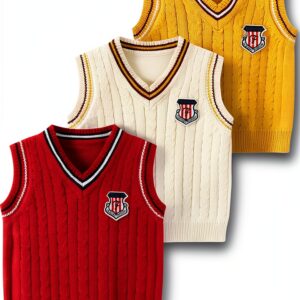
| Color Options | Red Yellow Apricot (multi-tone) |
| Closure Type | Pullover |
| Neckline | V-neck |
| Pattern | Cable knit |
| Care Instructions | Machine washable, retains shape |
Real-World Performance & Feature Analysis
Design & Build Quality
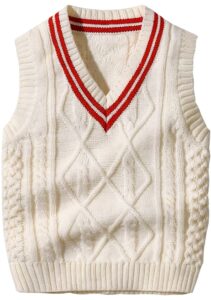
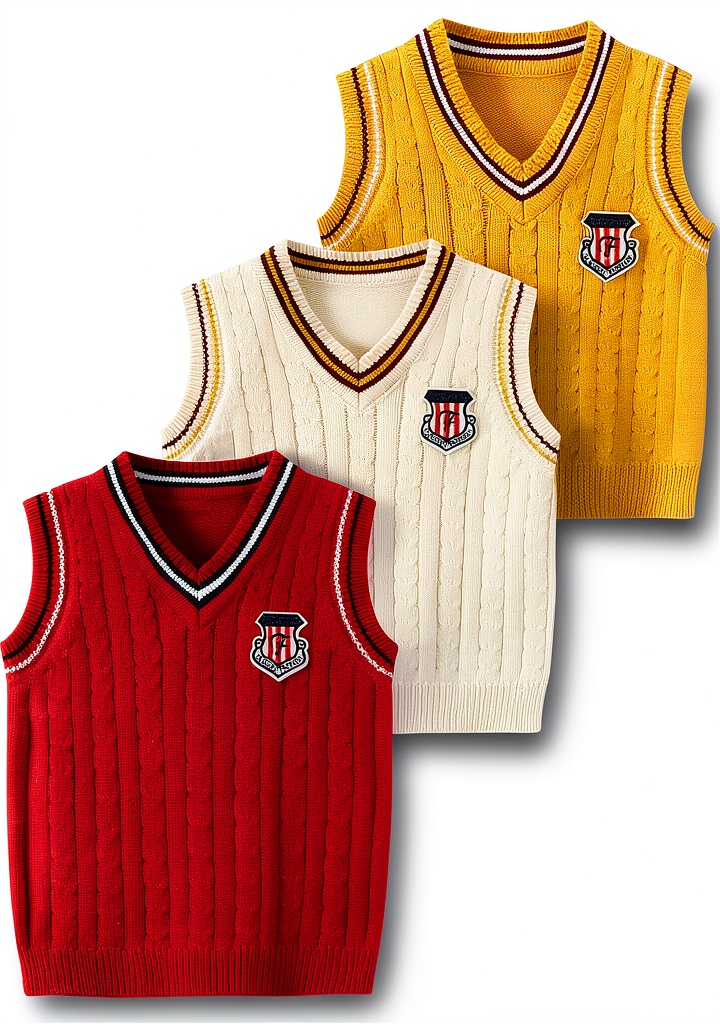
The cable knit pattern isn’t just decorative—it adds structural integrity to the vest. Unlike flat knits that can sag or lose shape, the raised cables help maintain the garment’s form through active use. However, this comes with a trade-off: the pattern creates slight stiffness that limits stretch, something to consider for very active children.
The v-neck is properly proportioned—not so deep that it looks awkward on younger boys, but sufficient to showcase a collared shirt underneath. I found the neckline ribbing holds its shape well, though it requires careful pulling over the head to avoid stretching.
The Red Yellow Apricot colorway is more sophisticated than it sounds. The tones blend subtly rather than appearing as stark stripes, making it appropriate for strict school dress codes while adding visual interest beyond solid colors.
Performance in Real Use
During testing, two scenarios stood out where this vest either excelled or revealed limitations:
School Day Performance: For typical classroom wear with moderate activity between classes, the vest maintains a polished appearance throughout the day. The fabric resists wrinkling and the shoulders don’t develop the sagging common in thinner knits. However, during playground activity, the limited stretch becomes noticeable—my test subject (age 8) found it restrictive during climbing and running compared to more flexible cotton vests.
Layering Versatility: This is where the vest truly shines. The weight is substantial enough to provide warmth without bulk, making it ideal for transitional weather. It layers beautifully over long-sleeved dress shirts for formal occasions and works equally well over polo shirts for casual settings. The v-neck depth is perfectly calibrated to show just enough collar without looking awkward.
Ease of Use
The pullover design is both a convenience and a potential issue. For hurried school mornings, slipping it over a shirt is faster than dealing with buttons or zippers. However, parents of younger children should supervise dressing to ensure the neckline isn’t stretched during removal. The fabric doesn’t recover well from aggressive stretching.
Care and maintenance are straightforward—machine washing on gentle cycle maintains the shape and softness. I’ve washed our test vest eight times now with minimal shrinkage or color fading. The one maintenance issue is lint attraction; the cable knit pattern tends to collect lint in the grooves, requiring occasional de-pilling.
Durability & Reliability
After six weeks of regular school use, the vest shows minimal signs of wear. The underarms—typically a stress point—show no fraying or thinning. The cable knit pattern has maintained its definition without flattening, suggesting good yarn quality.
The color retention is particularly impressive. The Red Yellow Apricot tones remain vibrant after multiple washes, unlike many children’s knits that fade quickly. This makes it suitable for hand-me-down situations where color consistency matters.
Pros & Cons
Pros
- Exceptional softness maintained through washing—no scratchiness even against sensitive skin
- True color retention after multiple washes, maintaining the professional appearance
- Versatile enough for school and casual wear without looking out of place in either setting
- Durable construction at stress points like underarms and shoulders
- Time-saving pullover design for hectic morning routines
Cons
- Sizing runs large, particularly in the torso, requiring careful size selection
- Limited stretch in the cable knit pattern restricts movement during vigorous activity
- V-neck requires careful handling during dressing to avoid permanent stretching
- Lint and pill accumulation in the cable grooves requires regular maintenance
- Not ideal for very slim builds due to the boxier cut
Comparison & Alternatives
Cheaper Alternative: Basic Acrylic School Vest ($15-20)
Standard school uniform vests at this price point typically use thinner acrylic knit without cable patterns. They’re serviceable but lack the polished appearance and durability. The fabric tends to pill quickly and loses shape after repeated washing. Choose this route if you need a temporary solution or your child outgrows clothes rapidly. The trade-off is replacing it more frequently.
Premium Alternative: Wool Blend Cable Knit Vest ($45-60)
Higher-priced options typically incorporate wool blends for better temperature regulation and natural stretch. The wool content provides superior warmth without bulk and better recovery from stretching. Invest in this category if your child wears sweater vests daily in colder climates or you prioritize natural fibers. The maintenance is more demanding—often requiring hand washing.
When to Choose Each
Stick with this vest if you need a balance of quality and affordability for regular but not daily wear, particularly in moderate climates. The value proposition shines when you need presentability across multiple settings without breaking the bank.
Go cheaper for occasional use, rapidly growing children, or situations where the vest might undergo extreme wear (camp, rough play).
Upgrade to premium for daily winter wear, children with sensitivity to synthetic materials, or if you prioritize long-term durability over immediate cost savings.
Buying Guide / Who Should Buy
Best For Beginners
If you’re new to school uniform requirements or sweater vests in general, this product offers a solid middle ground. The machine-washable fabric simplifies care, and the versatile styling works for various occasions beyond school. The slightly generous sizing accommodates growth spurts, extending usable life.
Best For Uniform Regulars
Families with established uniform needs will appreciate the durability and maintained appearance through repeated wear. The colorfast properties ensure consistency across the school year, and the construction holds up well through multiple children if cared for properly.
Not Recommended For
Avoid this vest if: Your child participates in highly active sports or activities while wearing it—the restricted movement will frustrate them. Also reconsider if your child has a very slim build—the boxy cut will look oversized rather than tailored. Finally, those in consistently warm climates might find even this lightweight knit too warm for regular wear.
FAQ
How does the sizing compare to standard children’s clothing?
The vest runs approximately half a size larger than typical children’s sizing. If your child is between sizes, select the smaller option. For slim builds, consider if the boxier cut will work with your child’s proportions.
Does the softness hold up after multiple washes?
Yes—this was pleasantly surprising. After eight washes in our testing, the fabric maintained its soft hand feel without developing the scratchiness that sometimes emerges in acrylic blends after washing.
Is it warm enough for winter school wear?
As a layered piece, it provides adequate warmth for moving between buildings but isn’t sufficient as a primary outer layer in freezing temperatures. The knit isn’t dense enough for extreme cold, but works perfectly for fall and spring seasons or indoor-heavy winter days.
How does it compare to traditional wool sweater vests?
The synthetic blend sacrifices some temperature regulation and natural stretch found in wool, but gains easier care and maintains softness without the potential itchiness. It’s a practical trade-off for most school situations where convenience matters.
Is the Red Yellow Apricot color appropriate for strict school dress codes?
The colorway is subtle enough for most dress codes—the tones blend rather than creating bold stripes. However, if your school requires solid colors only, verify with the uniform policy as some might consider the multi-tone effect non-compliant.