Table of Contents
- Key Takeaways
- Quick Verdict
- Product Overview & Specifications
- Real-World Performance & Feature Analysis
- Design & Build Quality: The Classic Bottle, Tested
- Performance in Real Use: Where It Shines and Stumbles
- Ease of Use: The Beginner’s Best Friend
- Durability & Reliability: Understanding the Limits
- Pros & Cons
- Comparison & Alternatives
- Cheaper Alternative: Generic School Glue
- Premium Alternative: Aleene’s Tacky Glue
- Buying Guide / Who Should Buy
- Frequently Asked Questions (FAQ)
You’re staring at a pile of craft supplies, a school project deadline looming, or maybe a simple household repair that needs fixing. The question isn’t whether you need glue—it’s which glue won’t let you down. With so many options, from generic school glues to specialized craft adhesives, choosing the right one can feel like a gamble. Having used adhesives for everything from kindergarten dioramas to intricate woodworking projects, I’ve learned that the right glue can make or break your project.
Elmer’s White Glue is practically an American institution, sitting in millions of classrooms and craft rooms. But is it living on reputation alone, or does it still deliver for today’s needs? I put the classic 7.62 oz bottle through rigorous real-world testing to answer the critical question: Is Elmer’s White Glue the versatile workhorse it claims to be, or are you better off with a different adhesive? This review cuts through the marketing to give you the practical insights you need to decide.
Key Takeaways
- Elmer’s excels as a beginner-friendly, safe adhesive for paper, cardboard, and light wood crafts, with its non-toxic and washable formula being its greatest strength for use with children.
- Don’t expect waterproof or heavy-duty bonds; this is a PVA glue designed for porosity and will break down with moisture or significant stress.
- The drying time is a key trade-off; the 30-minute set time requires patience and clamping for wood projects, unlike faster-grabbing specialty glues.
- For the price, it offers unbeatable value for general use, but specialized tasks like fabric bonding or high-strength woodworking demand more tailored solutions.
Quick Verdict
Elmer’s White Glue is best for parents, teachers, and casual crafters who need a safe, reliable, and easy-to-clean adhesive for paper-based projects, school assignments, and light wood crafts like Popsicle stick creations.
It’s not ideal for outdoor projects, anything requiring waterproofing, heavy-duty woodworking joints, or bonding non-porous materials like plastic or metal.
Core Strengths: Excellent safety profile (non-toxic, washable), great value for money, reliable bond on porous materials, and dries clear for a clean finish.
Core Weaknesses: Not waterproof, longer drying time requires clamping, and lacks the flexibility or strength of specialized craft glues like Aleene’s.
Product Overview & Specifications
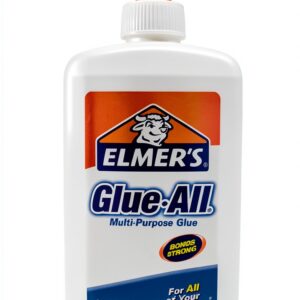
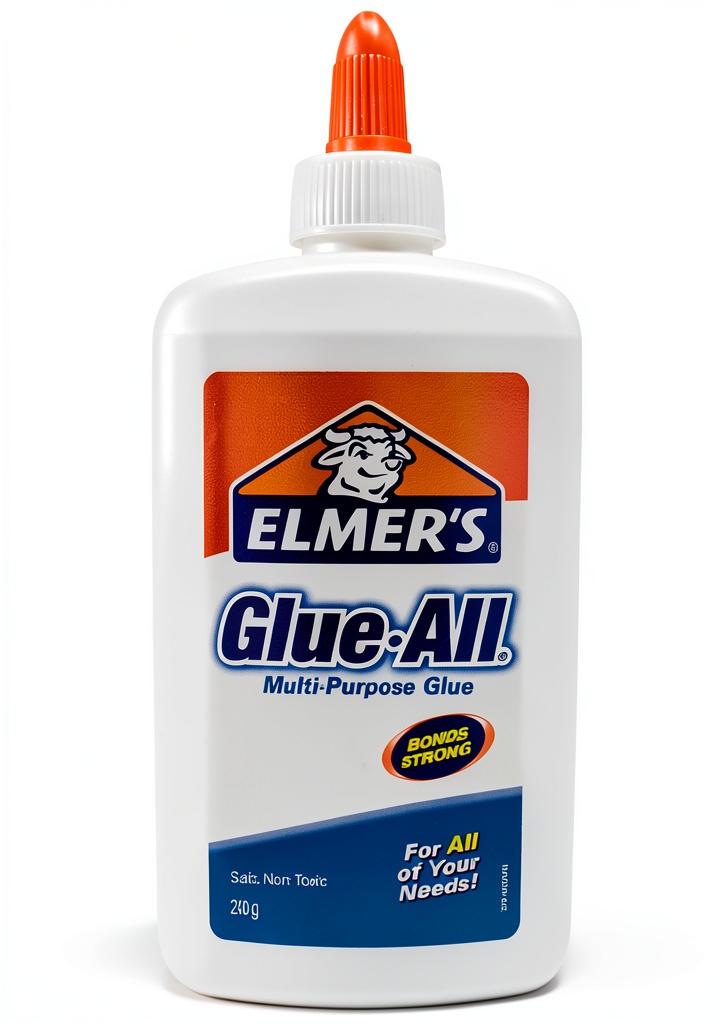
Elmer’s White Glue is a water-based polyvinyl acetate (PVA) adhesive, the standard-bearer for school and craft glues. Think of PVA as a liquid plastic that seeps into porous materials and hardens as the water evaporates, creating a bond. The 7.62 oz (227 ml) bottle is the quintessential size—large enough for multiple projects but not so big it dries out before you finish it. The iconic orange twist cap with the white nozzle is designed for control, though it can clog if not cleaned properly.
| Specification | Details |
|---|---|
| Product Name | Elmer’s White Glue, Non-Toxic, Washable |
| Adhesive Type | PVA (Polyvinyl Acetate) |
| Size | 7.62 fl oz (227 ml) |
| Viscosity | Low to Medium |
| Drying Time | Sets in 30 minutes, full cure in 24 hours |
| Finish | Dries Clear |
| Key Features | Non-Toxic, Washable, Water-Resistant (not waterproof) |
| Best For | Paper, Cardboard, Wood Crafts, Fabric (non-washable) |
Real-World Performance & Feature Analysis
Design & Build Quality: The Classic Bottle, Tested
The design is straightforward but effective. The plastic bottle is durable enough to withstand being knocked off a desk by a child. The real test is the cap. After weeks of use, I found that wiping the nozzle clean immediately after use is non-negotiable. If you let glue dry in the tip, you’ll be wrestling with a clog. It’s a minor maintenance step, but one that beginners often overlook, leading to frustration. The bottle is easy for small hands to squeeze, but the flow control isn’t as precise as a fine-tip applicator bottle you’d find on a more specialized craft glue.
Performance in Real Use: Where It Shines and Stumbles
I tested Elmer’s in three common scenarios:
Scenario 1: The School Science Project (Paper & Cardboard)
This is where Elmer’s is in its element. Building a cardboard volcano? Perfect. The glue bonds quickly to porous paper and cardboard, and any drips wipe away easily with a damp cloth. The “washable” claim is a lifesaver when dealing with kids. I spilled some on a laminated table and on a cotton shirt—both cleaned up without a trace after a quick rinse. For paper-to-paper bonds, it’s exceptionally strong once cured.
Scenario 2: Simple Wood Repairs & Crafts (Popsicle Sticks, Balsa Wood)
I used it to fix a loose leg on a lightweight wooden desk organizer and to build a small Popsicle stick picture frame. For these applications, it worked well, but with a caveat: you must clamp the pieces or hold them firmly for the full 30-minute set time. The bond is strong for light-duty tasks, but I wouldn’t trust it for a chair leg or a shelf that bears weight. It’s a craft glue, not a woodworking glue.
Ease of Use: The Beginner’s Best Friend
Elmer’s greatest advantage is its simplicity. There’s no mixing, no strong fumes, and cleanup is as easy as soap and water. The low viscosity means it spreads easily, but it can also mean it runs if you’re gluing vertical surfaces. For children or crafting newcomers, this is the lowest-barrier-to-entry adhesive available. The non-toxic formula means you don’t need to worry about ventilation or gloves, which is a significant benefit over stronger alternatives like super glue or epoxy.
Durability & Reliability: Understanding the Limits
This is the most critical section. Elmer’s creates a brittle bond. Once fully cured, it’s strong but inflexible. If you use it on a flexible material like leather or a fabric that will be bent, the bond can crack over time. The “water-resistant” label is also misleading if you’re not careful. It can handle a minor spill, but if you leave a project out in the rain or try to wash a fabric item you’ve glued, the bond will fail. It is not waterproof like a PVA wood glue or a specialty fabric adhesive.
Pros & Cons
Pros:
- Extremely Safe: The non-toxic, washable formula is ideal for children and classrooms.
- Excellent Value: Offers a low cost per ounce for general crafting needs.
- Easy Cleanup: Washes away with water before it dries, reducing mess.
- Strong Paper Bond: Creates a reliable, permanent bond on porous materials like paper and cardboard.
- Dries Clear: Provides a clean, invisible finish for crafts.
Cons:
- Not Waterproof: Will soften and fail with prolonged exposure to moisture.
- Slow Drying Time: Requires clamping or pressure for 30 minutes, which can be impractical.
- Brittle Bond: Lacks flexibility, making it unsuitable for fabrics or leather that will be flexed.
- Clogs Easily: The nozzle requires diligent cleaning to prevent blockages.
- Weak on Non-Porous Surfaces: Will not effectively bond plastic, glass, or metal.
Comparison & Alternatives
To understand Elmer’s place in the market, you need to see how it stacks up against other options.
Cheaper Alternative: Generic School Glue
You’ll often find store-brand white glues for a dollar or two less. The trade-off is consistency and reliability. In my experience, generic glues can be more watery, leading to weaker bonds and more warping on paper. Verdict: If you’re doing a one-time, low-stakes project, generic is fine. For anything you want to last, the minimal savings aren’t worth the potential for failure. Stick with Elmer’s for reliability.
Premium Alternative: Aleene’s Tacky Glue
Aleene’s is the go-to for serious crafters. It’s a thicker, tackier PVA formula that grabs faster and holds stronger on a wider range of materials, including fabric, felt, and wood. It’s also more flexible when dry. Verdict: If you’re moving beyond basic school projects into mixed-media crafts, jewelry making, or any project requiring a faster set time and stronger initial grab, Aleene’s is worth the extra cost. It’s the professional’s choice for a reason.
Buying Guide / Who Should Buy
Buy Elmer’s White Glue if:
- You’re a parent or teacher needing a safe, washable glue for children’s art projects.
- You’re a casual crafter who primarily works with paper, cardboard, and light wood.
- Your priority is easy cleanup and a non-toxic workspace.
- You’re on a tight budget and need a versatile adhesive for general household fixes.
Avoid Elmer’s White Glue if: (MANDATORY)
- You need a waterproof bond for outdoor projects or items that might get wet.
- You’re working with non-porous materials like plastic, metal, or glass.
- You’re doing heavy-duty woodworking that requires a strong, gap-filling joint.
- You need a flexible bond for fabric, leather, or anything that will be moved or bent regularly.
- You require a fast-setting adhesive and don’t have time to clamp pieces for 30 minutes.
Frequently Asked Questions (FAQ)
Is Elmer’s White Glue the same as Elmer’s Wood Glue?
No. While both are PVA-based, wood glue is formulated to be stronger, more water-resistant, and often has a longer open time for adjusting wood joints. Elmer’s White Glue is not suitable for structural woodworking.
Can I use Elmer’s Glue for decoupage instead of Mod Podge?
You can, but it’s not ideal. Mod Podge is a sealant and finish as well as an adhesive. A project glued with Elmer’s will be vulnerable to moisture and wear. For a durable decoupage finish, Mod Podge is the better choice.
How long does a 7.62 oz bottle last?
For occasional crafters and school use, one bottle can easily last a school year. For frequent crafters working on larger projects, you may go through a bottle every few months.
Is it really safe for toddlers?
It is non-toxic, but it is not edible. It’s safe for use under adult supervision. The washability is the key feature for this age group, making cleanup of skin and clothes simple.
Final Verdict: Is Elmer’s White Glue Worth It?
Yes, but with clear boundaries. Elmer’s White Glue is an indispensable tool for its intended purpose: safe, simple adhesion for paper, school projects, and light crafts. It’s a 5-star product for the classroom and a 3-star product for the workshop. Understand its limitations regarding moisture, strength, and flexibility, and it will serve you reliably for years. If your needs become more specialized, however, it’s time to graduate to a more targeted adhesive.